

A person cannot sleep at night because of obsessive thoughts
How to Stop Overthinking and Quiet Your Mind

Content
Picture this: it's the middle of the night, sleep nowhere in sight, and your mind keeps circling back to something you said at dinner last week. Was it awkward? Did everyone notice? The clock ticks past 3 AM while you dissect every word, searching for meaning that probably isn't there.
Sound exhausting? You're in good company. Studies conducted by sociologist Susan Nolen-Hoeksema revealed that roughly 73% of people between 25 and 35 deal with persistent overthinking. The pattern doesn't disappear with age either—about 52% of adults in the 45-55 range report similar struggles.
What many fail to recognize is that this mental habit does more than waste time—it actively undermines your wellbeing, strains your connections with others, and even manifests in physical symptoms. But here's the encouraging part: these thought patterns aren't permanent. You absolutely can learn to quiet the noise.
What Is Overthinking?
At its core, overthinking—often referred to as rumination—involves turning thoughts over and over without any productive outcome. Unlike purposeful reflection, this process traps you in repetitive mental cycles that never quite reach a conclusion.
Overthinking is rooted in uncertainty. Because we feel vulnerable about the future, we keep trying to solve problems in our head." The cruel irony? All that mental effort rarely yields actual answers—just heightened stress.
— Clinical psychologist Dr. David Carbonell

Author: Daniel Rowland;
Source: ameliaearhartbook.net
Distinguishing between overthinking and constructive mental activity matters more than you might expect:
Problem-solving moves toward resolution. You face a challenge, weigh your options, reach a decision, and act on it. There's a natural stopping point.
Self-reflection involves examining your experiences and emotions with genuine curiosity. This process generates insights and fosters personal development rather than spiraling into worry.
Overthinking lacks direction entirely. The thoughts repeat without purpose, typically centering on circumstances beyond your influence. Rather than producing clarity, they amplify distress.
What Does Overthinking Mean for Your Daily Life?
Once this pattern takes hold, even trivial choices become monumental undertakings. Selecting what to eat for lunch transforms into an exhausting deliberation.
So often people confuse overthinking with problem-solving. But what ends up happening is we just sort of go in a loop.
— Dr. Helen Odessky
This state—sometimes described using the older term nervous exhaustion—drives countless people to search for phrases like "mentally tired meaning" online, desperate to name what they're experiencing. The explanation is straightforward: when you overthink constantly, you drain your mental reserves through endless, fruitless analysis.

Author: Daniel Rowland;
Source: ameliaearhartbook.net
Signs of Overthinking
Spotting the warning signs early gives you the best chance of interrupting the cycle before it gains momentum.
Cognitive and Emotional Symptoms
- A mind that refuses to quiet down: Thoughts race especially at bedtime, and genuine relaxation feels impossible
- Paralysis around decisions: Choices that others make effortlessly leave you stuck and overwhelmed
- Mental reruns of the past: Old conversations and perceived missteps play on repeat in your head
- Jumping to disaster scenarios: Your imagination fast-forwards to worst-case outcomes that haven't happened
- Chronic second-guessing: Even after deciding, you question whether you chose correctly
- Heightened nervousness: The nonstop mental activity leaves you feeling perpetually on edge
Physical Symptoms
- Disrupted sleep: Falling asleep takes forever, or you wake repeatedly through the night
- Unrelenting tiredness: Rest doesn't restore your energy because your brain never truly powers down
- Tension and headaches: Tightness accumulates in your neck, shoulders, and jaw
- Stomach troubles: Ongoing stress triggers digestive complaints and appetite changes
Behavioral Signs
- Putting things off: You get stuck in analysis mode rather than actually beginning tasks
- Constantly seeking validation: You ask others the same questions repeatedly, hoping for reassurance
- Pulling back socially: Anticipating problems leads you to avoid people and situations
- Obsessive attention to detail: Fear of errors drives you to fixate on minutiae
Why Do I Overthink So Much? Common Causes

Author: Daniel Rowland;
Source: ameliaearhartbook.net
Anxiety and Mental Health Conditions
These two issues reinforce each other in a damaging feedback loop. Anxiety makes your brain perceive uncertainty as danger, prompting it to analyze every possible outcome as a form of protection. Unfortunately, this defense mechanism misfires when no actual threat exists, generating more anxiety instead of safety.
Perfectionism and Fear of Failure
Holding yourself to unrealistic standards transforms every choice into something momentous. The need to get everything exactly right drives exhaustive mental review—and since perfection remains forever out of reach, the analysis never ends.
Low Self-Esteem and Self-Doubt
Studies consistently demonstrate a strong connection between poor self-image and rumination. Without faith in your own judgment, you hunt for certainty elsewhere—and when external validation proves elusive, you overthink to compensate. This sets up a punishing loop where low confidence fuels overthinking, which further erodes confidence.
Past Trauma and Desire for Control
Growing up in chaotic or threatening circumstances can wire your brain for hypervigilance. Constant scanning for potential problems may have protected you once, but that survival strategy becomes maladaptive when danger passes. Overthinking persists as an attempt to anticipate every outcome and maintain some sense of control.
Is Overthinking Bad for You?
Without question. When chronic, this habit carries real and measurable consequences.
Impact on Mental Health
Studies show that ruminating on stressful events can, over time, lead to anxiety and depression.
— Dr. J. Christopher Fowler
Each time you cycle through negative thoughts, you're essentially training your brain to stay trapped there—reinforcing the very neural pathways that keep you stuck.
Effects on Relationships and Confidence
The fallout extends to your closest connections. You might read too much into a partner's words, invent problems where none exist, or start arguments based on imaginary slights. Meanwhile, chronic self-doubt chips away at your confidence—when you can't rely on your own judgment, you gradually stop believing in yourself altogether.
Physical Health Consequences
Persistent overthinking maintains your body's stress response in overdrive. Extended exposure to elevated cortisol contributes to heart problems, weakened immunity, gastrointestinal distress, chronic pain, and even premature cellular aging.
Overthinking and Rumination: The Connection to Self-Esteem
Rumination—the specific variety of overthinking that dwells on failures and shortcomings—proves especially destructive to self-perception. When you endlessly revisit your mistakes, you're rehearsing a narrative of inadequacy that wears down your sense of capability over time.
Research appearing in Personality and Social Psychology Bulletin established that diminished self-worth predicts increased rumination, which subsequently predicts depression. The progression creates a downward spiral: negative self-perception triggers obsessive analysis, which deepens negative self-perception further.
The practical effects show up everywhere. People caught in this pattern frequently pass on opportunities, minimize accomplishments, deflect praise, and struggle to stand up for themselves—behaviors that only confirm the underlying belief that they don't measure up.
How to Stop Overthinking: 12 Proven Strategies
Practice Mindfulness Meditation
This approach teaches you to witness your thoughts without getting pulled into them. Starting with just five minutes daily can produce noticeable shifts. Applications like Headspace and Calm provide structured guidance designed specifically for racing minds.
Challenge Cognitive Distortions
Familiarize yourself with common thinking traps: assuming catastrophe, believing you know what others think, viewing everything in absolutes. When you recognize these patterns, pause and ask yourself what actual evidence supports the thought.
Set "Worry Time" Limits
Designate a specific window each day—perhaps 20 minutes—dedicated to concerns. When worries surface outside this period, jot them down and deliberately postpone them. Many will seem far less urgent by the appointed time.
Use Grounding and Breathing Exercises
The 5-4-3-2-1 method anchors you in present reality: identify five visible objects, four audible sounds, three tactile sensations, two scents, and one taste. Controlled breathing—four counts in, four counts hold, four counts out, four counts hold—signals your nervous system to calm down.
Exercise for Mental Clarity
Movement releases natural mood enhancers, lowers stress hormones, and channels restless energy productively. A brief walk around the block can shift your entire mental state.
Journal Your Thoughts
Transferring worries from your head to paper creates valuable distance and often reveals patterns you'd otherwise miss. Try writing freely without filtering—dump everything cluttering your mind onto the page.
Replace Thoughts, Don't Suppress Them
Dr. Catherine Pittman makes a crucial distinction: "Telling yourself not to have a certain thought is not the way to not have the thought. You need to replace the thought." Attempting to block thoughts backfires; deliberately shifting focus to something else works far better.
Limit Screen Time and Information Overload
Endless notifications and social media feeds supply unlimited material for an already hyperactive brain. Establish boundaries around device use and create genuine mental downtime.
Practice Self-Compassion
Notice when self-criticism spirals and pause to consider: how would you respond if a close friend described this same struggle? Extend that same understanding toward yourself.
Take Action Instead of Analyzing
Pose a simple question: can I do something concrete about this right now? If the answer is yes, take even one small step. If not, acknowledge that continued analysis serves no purpose and consciously redirect your attention.
Connect with Others
Talking through concerns with someone you trust offers perspective and reality checks that solitary thinking cannot provide. Just be careful to distinguish supportive conversation from endless joint rumination.
Seek Professional Help
Cognitive Behavioral Therapy demonstrates particular effectiveness for breaking overthinking patterns. A qualified therapist offers individualized strategies and support that generic advice cannot match.
Mental Clarity Exercises to Calm Anxious Thinking Habits
Author: Daniel Rowland;
Source: ameliaearhartbook.net
5-4-3-2-1 Grounding: Work through your senses systematically—five things seen, four heard, three touched, two smelled, one tasted. This technique relocates your attention from internal worry to external reality.
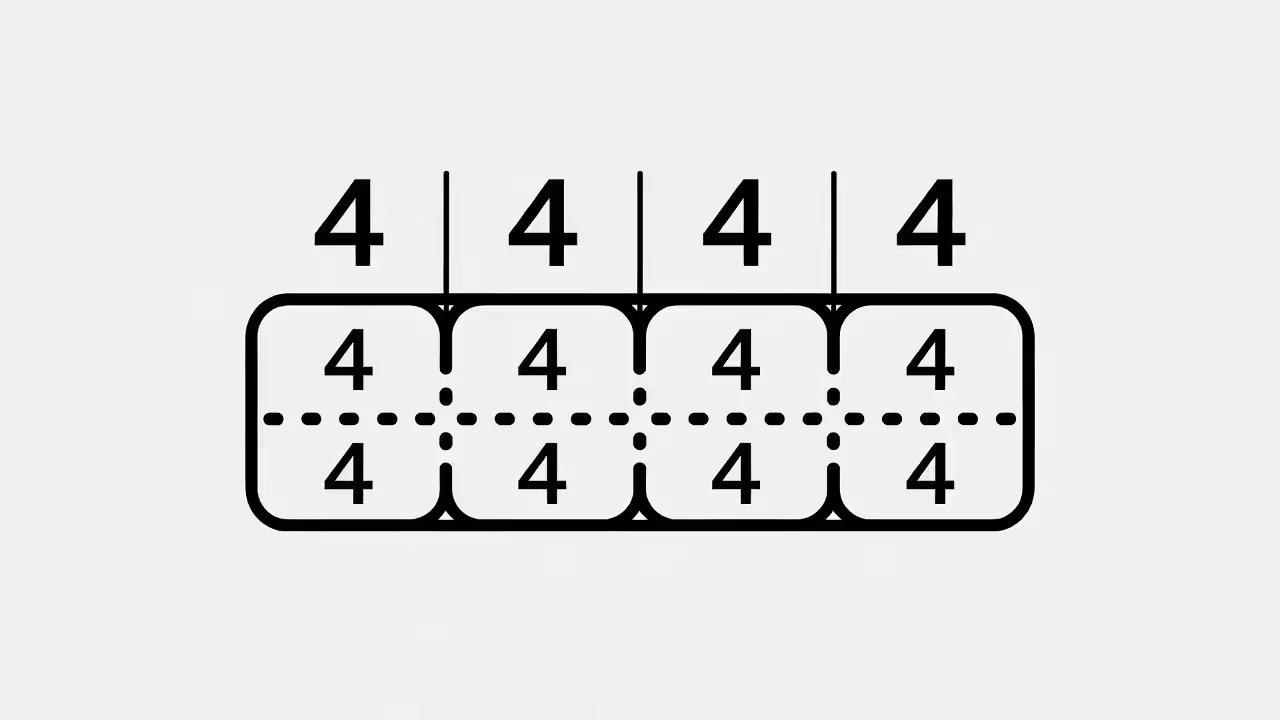
Box Breathing: Follow a square pattern—inhale four counts, pause four counts, exhale four counts, pause four counts. Several cycles activates your body's natural calming response.
Body Scan Meditation: Beginning at your scalp and moving slowly downward, bring gentle awareness to each body region without trying to change anything. Ten to fifteen minutes produces meaningful relaxation.
Thought Labeling: When you catch yourself spiraling, simply name what's occurring: "worrying," "catastrophizing," "rehashing." This labeling creates psychological distance without requiring you to fight the thought.
When to Seek Professional Help
Certain situations warrant guidance beyond self-help: when overthinking substantially disrupts your job, relationships, or daily functioning; when you've applied these strategies consistently without relief; when hopelessness persists; or when you're turning to substances for escape.
Research strongly supports CBT for addressing rumination. Additional evidence-based options include Acceptance and Commitment Therapy and Mindfulness-Based Cognitive Therapy.
Frequently Asked Questions
Final thoughts
Living with an overactive mind is draining, lonely, and surprisingly common. If you've wondered for years why your brain simply won't cooperate, take heart: nothing is fundamentally wrong with you, and genuine improvement lies within reach.
Begin modestly—select one or two approaches that appeal to you and commit to practicing them regularly. The objective isn't silencing your mind completely but learning to reduce overthinking until it no longer dominates your experience. Aim for gradual progress rather than instant transformation.
Keep perspective: thoughts—even persistent, convincing ones—aren't equivalent to truth. They arise and pass like weather systems. With sustained effort, you can develop the ability to watch them move through without being swept away.
You deserve mental peace. You deserve full presence in your own life rather than perpetual imprisonment in your head. Escaping the overthinking trap demands real work, but few investments pay greater dividends.
When personal efforts fall short, professional support exists. The 988 Suicide and Crisis Lifeline provides free, confidential assistance around the clock.