
A thoughtful person standing in a calm room with a hand on their chest, reflecting on their habit of over-apologizing
How to Stop Over-Apologizing and Build Confidence

Content
If you’re anything like I used to be, you might find yourself saying “sorry” left and right—even for things that aren’t your fault. Maybe you bump into a table and apologize to it, or feel guilty for asking a simple question at work. I’ve been there, and it’s exhausting. Drawing from my exploration of emotional well-being—much like how balanced eating nourishes the body, these patterns quietly drain your confidence—I’ve learned that over-apologizing isn’t just a quirky habit. It often reflects deeper beliefs about self-worth and how we navigate social situations. In this article, we’ll break down the psychology of over-apologizing, explore its connection to trauma and low self-esteem, and share practical strategies to stop saying sorry when you don’t need to. Trust me—learning to own your words is genuinely freeing.
We’ll start with the basics, dig into the psychological roots, examine links to childhood experiences and past trauma, and wrap up with actionable tips. If you’ve been wondering, “Why do I apologize so much?” this guide is for you.
What Is Over-Apologizing?
Over-apologizing is the habit of saying sorry too often—even for things that are beyond your control or that simply don’t call for an apology. It becomes almost automatic, showing up in everyday conversations where a nod, a brief acknowledgment, or silence would be perfectly fine. Over time, this pattern can make interactions feel unbalanced and gradually chip away at your self-confidence.
Here’s an example: You’re in a meeting, and a colleague arrives late—yet you apologize for starting without them. Or you say sorry for having a different opinion from a friend. In both cases, the apology isn’t warranted, but it slips out anyway.

Author: Daniel Rowland;
Source: ameliaearhartbook.net
Signs You Apologize Too Much
Recognizing the pattern is the first step toward change. Here are some common signs that you might be over-apologizing:
- You say sorry for things you can’t control, like bad weather or someone else’s mood.
- Friends or coworkers regularly point it out, saying things like “You don’t need to apologize for that!”
- You feel anxious or uncomfortable when you don’t apologize, as if saying sorry prevents conflict.
- It creeps into your texts and emails—for instance, opening with “Sorry for the delay” over a minor wait.
- You apologize before stating your opinion or asking for what you need.
If any of these ring true, you’re not alone. Many people over-apologize without realizing it deserves a closer look.
Why Do I Say Sorry So Much?
If you’ve ever wondered, “Why do I keep saying sorry?” the answer often lies in psychology—specifically, in how we’ve learned to handle social situations. It’s rarely about being overly polite. More often, it’s a protective mechanism against perceived rejection, judgment, or conflict.
The Psychology of Over-Apologizing
From a psychological standpoint, excessive apologizing often stems from anxiety or an intense desire to keep the peace. Saying sorry acts as a preemptive buffer: by apologizing in advance, you try to defuse any possible tension. However, as therapist Beverly Engel notes in her work on the nature of apology, over-apologizing can actually make you appear less confident and may even invite disrespect from others.
There’s a compounding effect, too. When you apologize constantly, your brain starts to internalize the idea that you’re always at fault, which fuels negative self-talk. In relationships, it can create a power imbalance where you’re always the one yielding ground. Research on self-esteem shows that how we value ourselves directly shapes com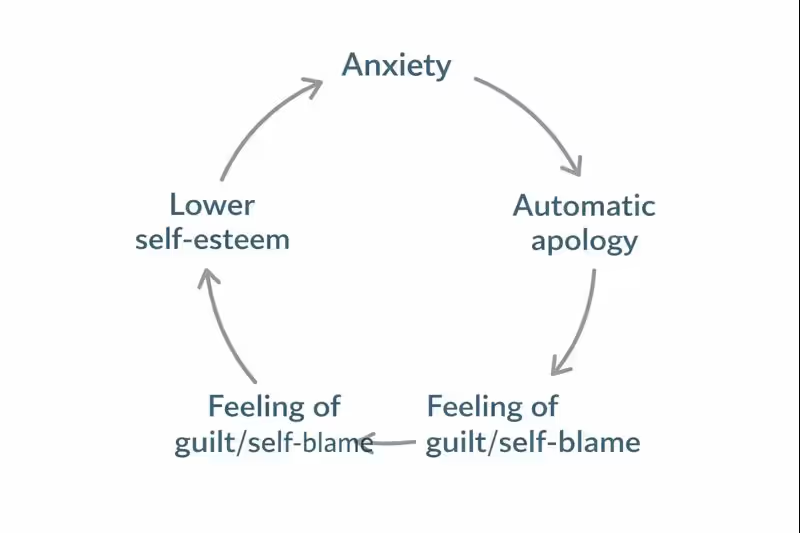
Author: Daniel Rowland;
Source: ameliaearhartbook.net
Low Self-Esteem and Insecurity
Apologizing from a place of low self-esteem is closely tied to insecurity-driven behavior. When your sense of self-worth is shaky, saying sorry becomes a way to shrink yourself—to avoid drawing attention or criticism. You might apologize for contributing an idea in a meeting, even when your input is genuinely valuable.
Trauma specialist Kobe Campbell puts it well: “At its core, over-apologizing is a betrayal of self. It’s taking ownership of blame and consequences that aren’t yours, training your brain to accept fault it doesn’t deserve.” This cycle erodes confidence and makes it increasingly difficult to stand firm in your own perspective.
Apologies have nothing to do with you being right or wrong. They are about recognizing when your words or actions have caused harm.
— Harriet Lerner,
When apologies lose that specificity and become reflexive, they stop serving their purpose.
Over-Apologizing as a Trauma Response
Sometimes, the habit of saying sorry goes beyond social conditioning—it’s a coping mechanism rooted in past trauma. If you grew up in an environment where conflict led to emotional or physical harm, apologizing may have become your survival strategy.

Author: Daniel Rowland;
Source: ameliaearhartbook.net
The Fawn Response and People-Pleasing
You’ve probably heard of the fight-or-flight response, but trauma researchers also identify a “fawn” response—a pattern of people-pleasing that develops as a way to stay safe in threatening situations. Over-apologizing fits squarely into this category. When saying sorry was the fastest way to de-escalate a volatile situation in childhood, the brain encodes it as a go-to survival tool.
In adult life, this shows up in relationships, at work, and in everyday interactions. If your partner is irritated about something unrelated to you, you might automatically apologize to calm things down—echoing a pattern from years earlier.
Researcher Brené Brown captures this tension powerfully: "Daring to set boundaries is about having the courage to love ourselves, even when we risk disappointing others." For chronic over-apologizers, learning to tolerate that discomfort is the path toward authentic self-expression.
Links to Childhood and Past Experiences
Over-apologizing as a trauma response frequently traces back to childhood. If you grew up in a household where blame was assigned quickly or punishment was unpredictable, you likely learned to apologize preemptively to avoid making things worse. This pattern can be reinforced by emotionally volatile caregivers, bullying, or environments where expressing your needs was met with hostility. Psychologists link this to the broader fight-or-flight response, where the fawn reaction represents a lesser-known but equally powerful survival strategy.
Family therapist Vienna Pharaon describes it clearly: “These patterns steal your confidence by telling you to stay small, stay quiet, and stay compliant.” Recognizing the origin of the habit is a powerful step toward breaking it.
How to Stop Over-Apologizing
The good ne
Author: Daniel Rowland;
Source: ameliaearhartbook.net
Building Boundaries and Self-Esteem
Start by strengthening your personal boundaries. Boundaries mean recognizing when something isn’t your fault and holding that line instead of reflexively apologizing. A practical first step is keeping a journal: track every time you say sorry over the course of a week, then review each instance. Was an apology actually needed? What could you have said instead?
Building self-esteem goes hand in hand with this work. Celebrate small wins. Remind yourself that you’re entitled to your opinions, your space, and your needs. Over time, this reduces the impulse to apologize out of insecurity.
Unnecessary apologies send a subtle signal—to yourself and others—that your presence, your thoughts, and the space you occupy are somehow an imposition.
— Dr. Maya Cohen
Practical Tips and Alternatives to Saying Sorry
Here are straightforward strategies you can start using today:

Author: Daniel Rowland;
Source: ameliaearhartbook.net
- Pause before you apologize. When “sorry” is about to come out, take a breath. Ask yourself: “Did I actually do something wrong?” If the answer is no, skip it.
- Replace sorry with gratitude. Instead of “Sorry for being late,” try “Thanks for waiting.” This shift—illustrated beautifully by artist Yao Xiao—reframes the interaction positively.
- Use direct language. Swap “Sorry to bother you, but…” for “Do you have a moment?”
- Identify your triggers. Notice which situations or people prompt the most unnecessary apologies, and prepare alternative responses in advance.
- Practice self-compassion. Remind yourself that taking up space is not an inconvenience. You deserve to be heard.
For a quick reference, here are common over-apologizing situations and what to say instead:
| Situation | Over-Apologizing Example | Better Alternative |
| Running late | “So sorry I’m late!” | “Thanks for your patience.” |
| Asking for help | “Sorry to ask, but…” | “Could you help me with this?” |
| Stating your needs | “Sorry, but I need…” | “I’d like to take a moment to think about that.” |
| Minor accidents | “Sorry I bumped you!” | “Excuse me!” or a quick smile |
| Disagreeing | “Sorry, but I disagree.” | “I see it differently—here’s my perspective.” |
| Expressing emotions | “Sorry for being upset.” | “I’m feeling frustrated, and here’s why.” |
| Following up | “Sorry to follow up…” | “Just checking in on this.” |
A practical example: If you’re at a coffee shop and your order is wrong, skip “Sorry, but this isn’t what I ordered.” Instead, try “This doesn’t look like what I ordered—could you double-check?” It’s assertive without being rude.
Remember, genuine apologies absolutely have their place—when you’ve truly made a mistake or hurt someone. The goal isn’t to eliminate sorry entirely, but to reserve it for moments when it’s meaningful.
When to Seek Professional Help

Author: Daniel Rowland;
Source: ameliaearhartbook.net
If your habit of over-apologizing is connected to deeper issues like anxiety, trauma, or depression, working with a mental health professional can make a real difference. Signs that it might be time to seek help include the habit significantly affecting your relationships, career, or daily functioning, or feeling unable to change the pattern on your own despite consistent effort.
Therapeutic approaches such as cognitive behavioral therapy (CBT) are particularly effective at identifying and restructuring the thought patterns behind chronic apologizing. Many therapists now offer sessions online, making support more accessible than ever. Taking that step is not weakness—it’s one of the strongest things you can do for yourself.
Breaking the over-apologizing habit means reclaiming your place in the world. It’s hard at first—I still catch myself sometimes—but every time you choose a different response, you’re building a stronger sense of self. Where will you try a new phrase today?
Frequently Asked Questions