
The Hidden Storm Within
What Are Anxiety Triggers and How to Spot Them

Content
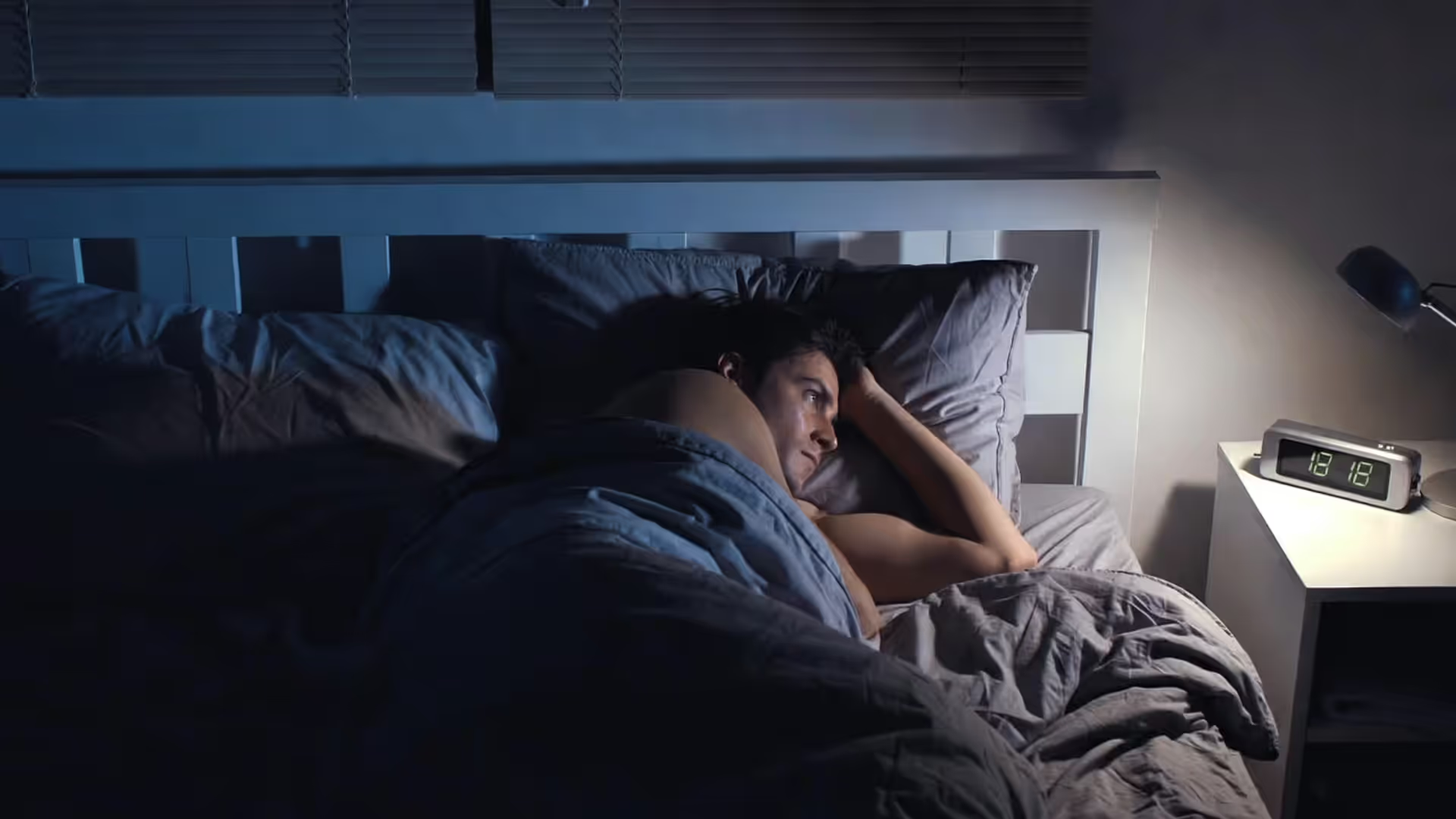
Picture this: you're watching TV after a perfectly ordinary day when your chest tightens, your thoughts race, and a sense of impending doom settles over you like a heavy blanket. Nothing happened. No bad news, no conflict, no obvious reason. Yet here you are, gripped by unease you can't explain.
If this sounds familiar, you're experiencing one of the most frustrating aspects of living with chronic worry — the sensation that stress arrives uninvited, without warning or logical cause. But here's what most people don't realize: that "out of nowhere" feeling is almost always an illusion. Something sparked that reaction. The challenge is learning to see what's hiding in plain sight.
This guide will help you decode the hidden language of your nervous system, identify what's really setting off your distress, and develop practical strategies for responding with clarity instead of fear
What Exactly Sets Off an Anxious Response?
A trigger is any stimulus — internal or external — that activates your body's alarm system. It could be a situation, a passing thought, a physical sensation, a faint memory, or even your morning espresso. When your brain perceives a threat (real or imagined), it launches the fight-or-flight response: elevated heart rate, rapid breathing, muscle tension, and that unmistakable feeling that something is wrong.
The tricky part? Triggers are deeply personal. What sends one person spiraling might barely register for another. Your coworker thrives under deadline pressure while you freeze. Your partner loves crowded festivals while you scan for exits. This individuality makes self-discovery essential — no generic list can replace understanding your own patterns.
What overwhelms one person may not affect another at all. The goal isn't eliminating every potential catalyst, but understanding your unique responses so you can navigate life with greater confidence.
— Dr. Judson Brewer, Psychiatrist, Brown University
The Most Common Catalysts (That Often Go Unnoticed)
Physical and Lifestyle Factors
Your body and mind aren't separate systems — they're constantly influencing each other. Many people overlook how profoundly physical states affect mental wellbeing.
What you consume matters:
- Caffeine mimics stress responses: racing pulse, heightened alertness, jitteriness
- Blood sugar crashes create symptoms identical to panic: shakiness, irritability, pounding heart
- Alcohol disrupts sleep architecture and causes rebound nervousness during withdrawal
- Skipping meals forces your body to release stress hormones
- Dehydration subtly shifts mood and amplifies unease
Sleep is non-negotiable:
- Even one night of poor rest dramatically increases emotional reactivity
- Irregular schedules dysregulate your entire nervous system
- Quality matters more than quantity — six hours of deep sleep often beats eight hours of tossing
Substances create cycles:
- Nicotine feels calming momentarily but increases baseline nervousness over time
- Cannabis helps some people but triggers significant distress in others
- Withdrawal from almost anything — including caffeine — can spark intense symptoms
Your body keeps the score:
- Hormonal fluctuations (menstrual cycles, thyroid changes, perimenopause)
- Chronic pain maintains a heightened state of nervous system activation
- Illness stresses the body before you consciously feel sick
Both too little and too much exercise can destabilize mood

Author: Allison Monro;
Source: ameliaearhartbook.net
Environmental and Situational Factors
External circumstances often provide more obvious clues, though some remain surprisingly hidden.
Social situations: Parties, presentations, conflict, feeling evaluated, crowds, meeting strangers, being the center of attention
Work pressures: Deadlines, performance reviews, job insecurity, overwhelming workload, difficult colleagues
Physical environment: Loud or sudden noises, harsh lighting, clutter, specific locations tied to negative memories, weather changes, stuffy rooms
Life transitions: Moving, new jobs, relationship changes, financial stress, health concerns, grief, uncertainty about the future
Psychological and Emotional Patterns
Sometimes the spark isn't external at all — it's a thought or feeling you barely noticed having.
Thought patterns: Negative self-talk, ruminating on the past, catastrophizing about the future, perfectionism, comparing yourself to others, imposter feelings
Emotional states: Feeling out of control, uncertainty, feeling trapped, fear of rejection, shame, suppressed emotions
Memory and trauma: Reminders of past experiences, anniversary reactions, sensory cues (a smell, a song) that transport you backward

Author: Allison Monro;
Source: ameliaearhartbook.net
The Hidden Culprits
When distress truly seems to arrive without cause, consider these often-missed factors:
- Subconscious associations — Your brain connects present stimuli to past experiences without conscious awareness
- Positive events — Promotions, vacations, and falling in love involve change, pressure, and fear of loss
- Gut-brain connection — Digestive issues directly influence mental state
- Blood sugar drops — Crashes feel exactly like panic attacks
- Medication interactions — Side effects aren't always obvious
- Subtle environment — Barometric pressure, poor ventilation, low-level noise
| Category | Examples | Commonly Missed? |
| Physical | Caffeine, sleep debt, hormones | Yes |
| Environmental | Noise, crowds, lighting | Sometimes |
| Psychological | Perfectionism, rumination | Sometimes |
| Hidden/Internal | Gut health, blood sugar, subconscious memories | Frequently |
Why Does Worry Strike "For No Reason"?
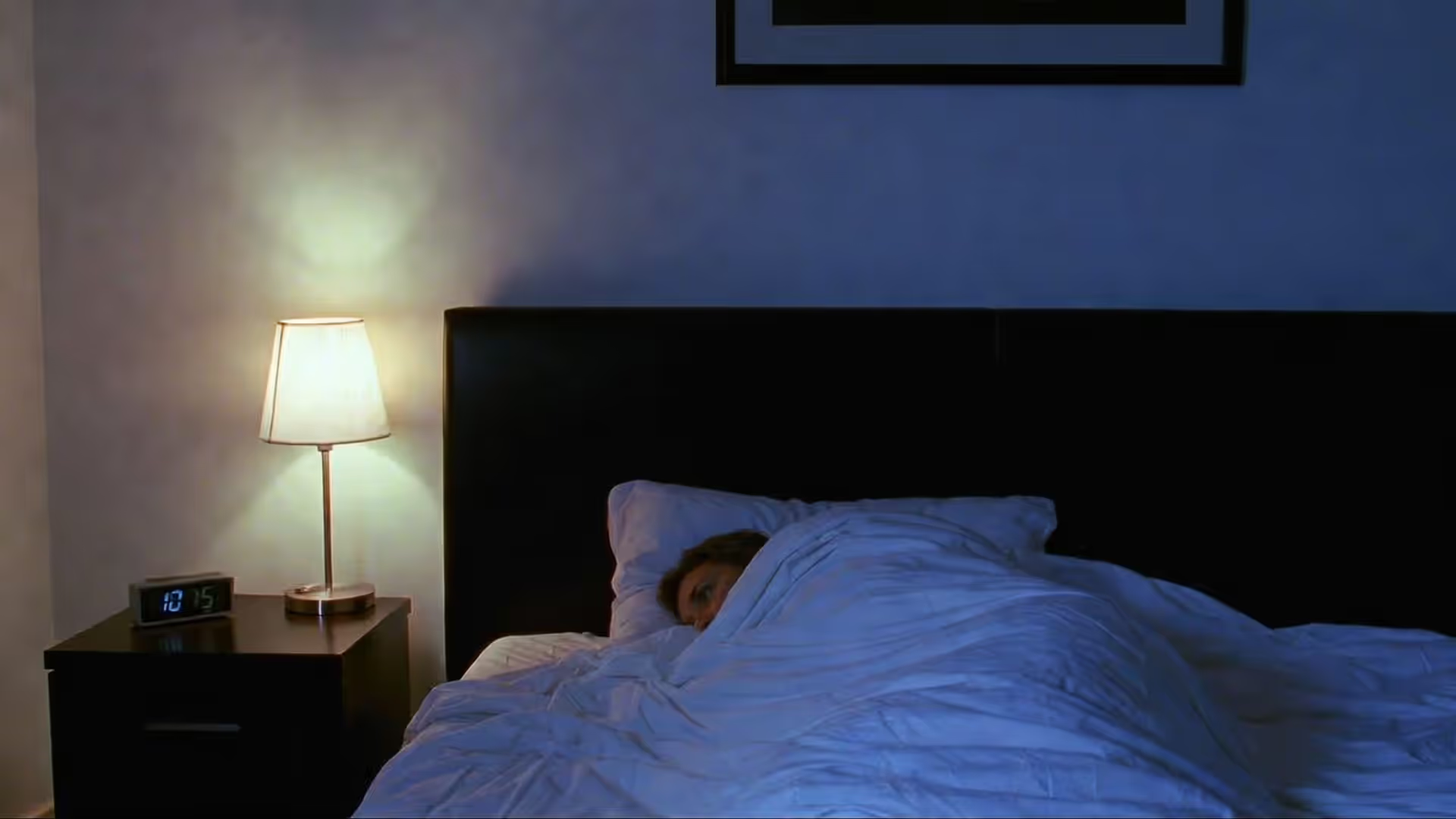
This question haunts almost everyone who struggles with chronic unease. You're relaxing at home, nothing is wrong, and suddenly your nervous system sounds every alarm.
The truth: There's almost always a reason — it's just invisible.
Delayed reactions: You might handle stress calmly in the moment, then experience the emotional fallout hours or days later when your guard drops.
Cumulative load: Individual pressures seem manageable, but they accumulate. Today's distress might be overflow from weeks of tension.
Subconscious processing: Your brain constantly scans for threats beneath conscious awareness. It might detect patterns or sensory cues you never consciously registered.
Physical masqueraders: Blood sugar crashes, caffeine effects, hormonal shifts, sleep debt, and nutritional deficiencies can all create symptoms indistinguishable from psychological distress.
When someone says they feel worried 'for no reason,' the reason is almost always there — just not immediately visible. Our job is becoming detectives of our own experience.
— Dr. Ellen Vora, Psychiatrist, Author of "The Anatomy of Anxiety
For some people, the nervous system becomes chronically dysregulated, maintaining baseline unease regardless of circumstances. This is characteristic of Generalized Anxiety Disorder, where the threshold for activation becomes so low that almost anything sets it off.

Author: Allison Monro;
Source: ameliaearhartbook.net
How to Identify Your Personal Patterns
Generic lists help, but real power comes from mapping your specific landscape.
Keep a Tracking Journal
When distress strikes, record:
- Date and time
- Situation and location
- Physical state (sleep, food, caffeine, cycle)
- Thoughts running through your mind
- Intensity level (1-10)
- Your best guess at the catalyst
After two to three weeks, patterns emerge that weren't obvious in the moment.
| When | Situation | Physical State | Intensity | Possible Catalyst |
| Mon 9am | Team meeting | Tired, 2 coffees, no breakfast | 7 | Caffeine + hunger + evaluation |
| Wed 11pm | Bed | Exhausted, scrolled phone | 6 | Screens + deadline worry |
| Sat 3pm | Mall | Well-rested, fed | 5 | Crowds + fluorescent lights |
Monitor Physical Factors
For two weeks, track sleep, caffeine, alcohol, meals, exercise, and (if applicable) menstrual cycle. The correlations often surprise people.
Notice Mental Patterns
Pay attention to thoughts preceding spikes. Recurring themes? "Should" statements? Catastrophizing? Comparing yourself to others?
Consider Professional Support
Therapists trained in CBT can help identify thought-based patterns, while EMDR effectively addresses trauma-related responses.
What to Do Once You Know Your Patterns
Distinguish between avoidable and unavoidable catalysts. Cutting caffeine makes sense if it reliably causes problems. But avoiding all social situations typically worsens social fears — avoidance reinforces the belief that these situations are dangerous.
For unavoidable situations: Prepare in advance, have coping tools ready, practice self-compassion when activated, focus on building resilience over time.
Address root causes: Physical factors respond to lifestyle changes. Psychological patterns respond to therapy. Trauma-related responses often require specialized approaches like EMDR.

Author: Allison Monro;
Source: ameliaearhartbook.net
When Professional Help Becomes Essential
Self-help strategies work for many people, but seek professional support if:
- You can't identify patterns despite consistent tracking
- You're experiencing panic attacks
- You're avoiding increasingly large portions of life
- Distress significantly impacts work, relationships, or daily functioning
- Depression accompanies your symptoms
- You're using substances to cope
- You have thoughts of self-harm
Frequently Asked Questions
Moving Forward
Understanding what activates your nervous system is one of the most empowering steps you can take. The goal isn't a trigger-free existence — that's neither possible nor necessary. The goal is awareness.
Start small: keep a journal for two weeks. Note when distress appears, what's happening around you, and your physical state. You might discover that your "random" symptoms follow predictable patterns.
And remember — reaching out to a mental health professional isn't weakness. It's one of the strongest choices you can make.
With understanding comes choice. With choice comes freedom.
This article is for informational purposes only and does not constitute medical advice. Please consult a qualified mental health professional for personalized guidance.