Why Anxiety at Night Happens and How to Sleep
Why Anxiety at Night Happens and How to Sleep

Content
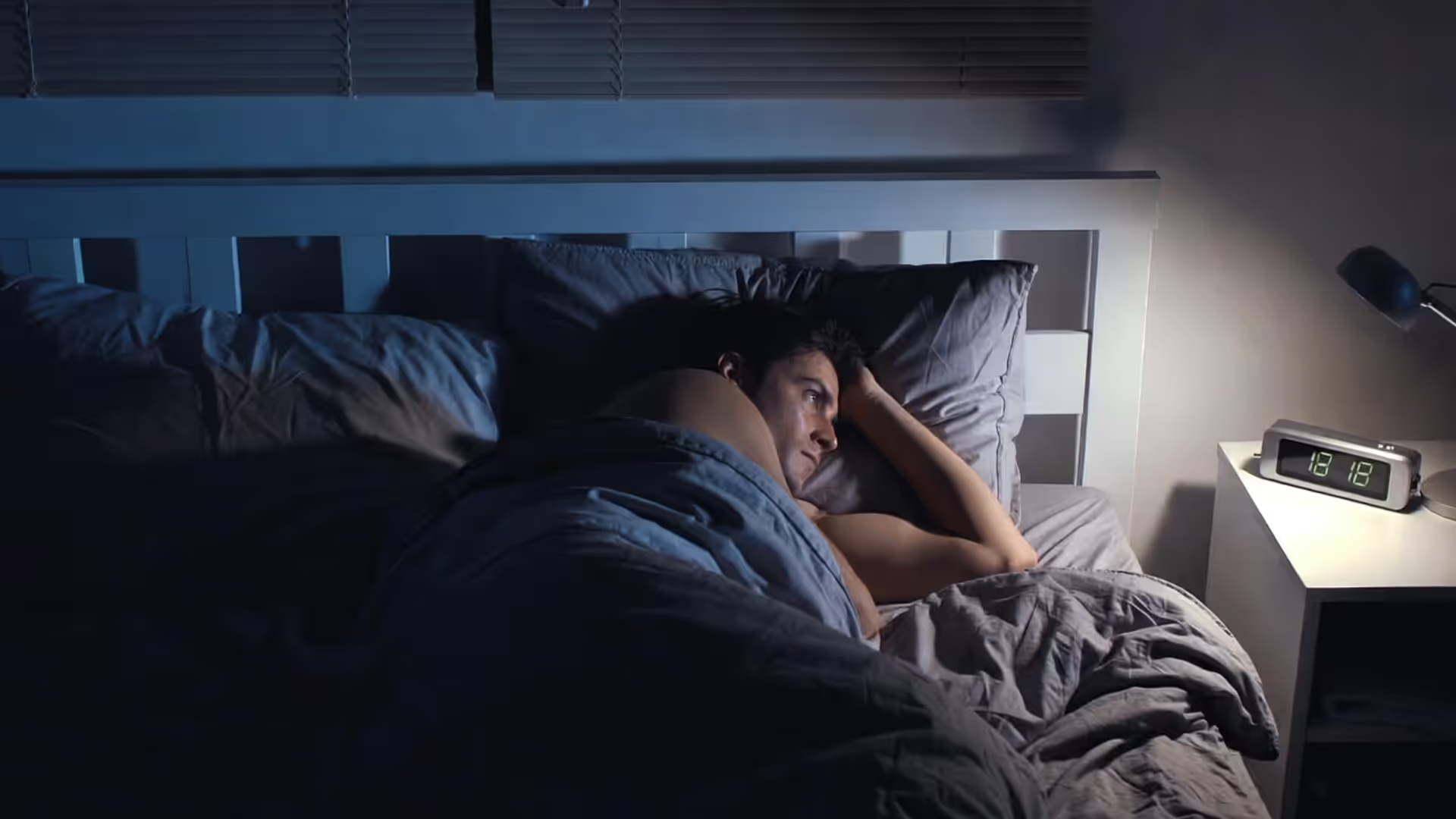
The household has fallen silent. Everyone else has drifted off. Yet your brain? It's sprinting at full speed. Concerns cascade from one to another — the looming deadline, that uncomfortable exchange from days ago, a remark you made years back that now seems unbearably embarrassing. Pressure builds in your chest. Your pulse quickens. Drifting off feels utterly out of reach.
If this resonates, you're encountering something countless Americans face each evening: worry that emerges after dark. It's that distinctive form of unease that appears to lurk in the shadows until you turn off the lamp, transforming what should be restorative slumber into hours of endless mental churning.
Here's the encouraging reality: while this evening distress proves incredibly aggravating, it's both widespread and controllable. Grasping the reasons behind it represents your initial move toward reclaiming restful nights. Let's examine what's actually occurring — and crucially, how you can address it.
Understanding Evening Unease
This phenomenon — occasionally termed sleep-related worry — describes sensations of apprehension, dread, or disquiet that strengthen as you attempt to drift off or that rouse you in the middle of the night. It doesn't constitute an official medical condition by itself, but rather represents a pattern that numerous individuals with diagnosed conditions (plus many without) encounter routinely.
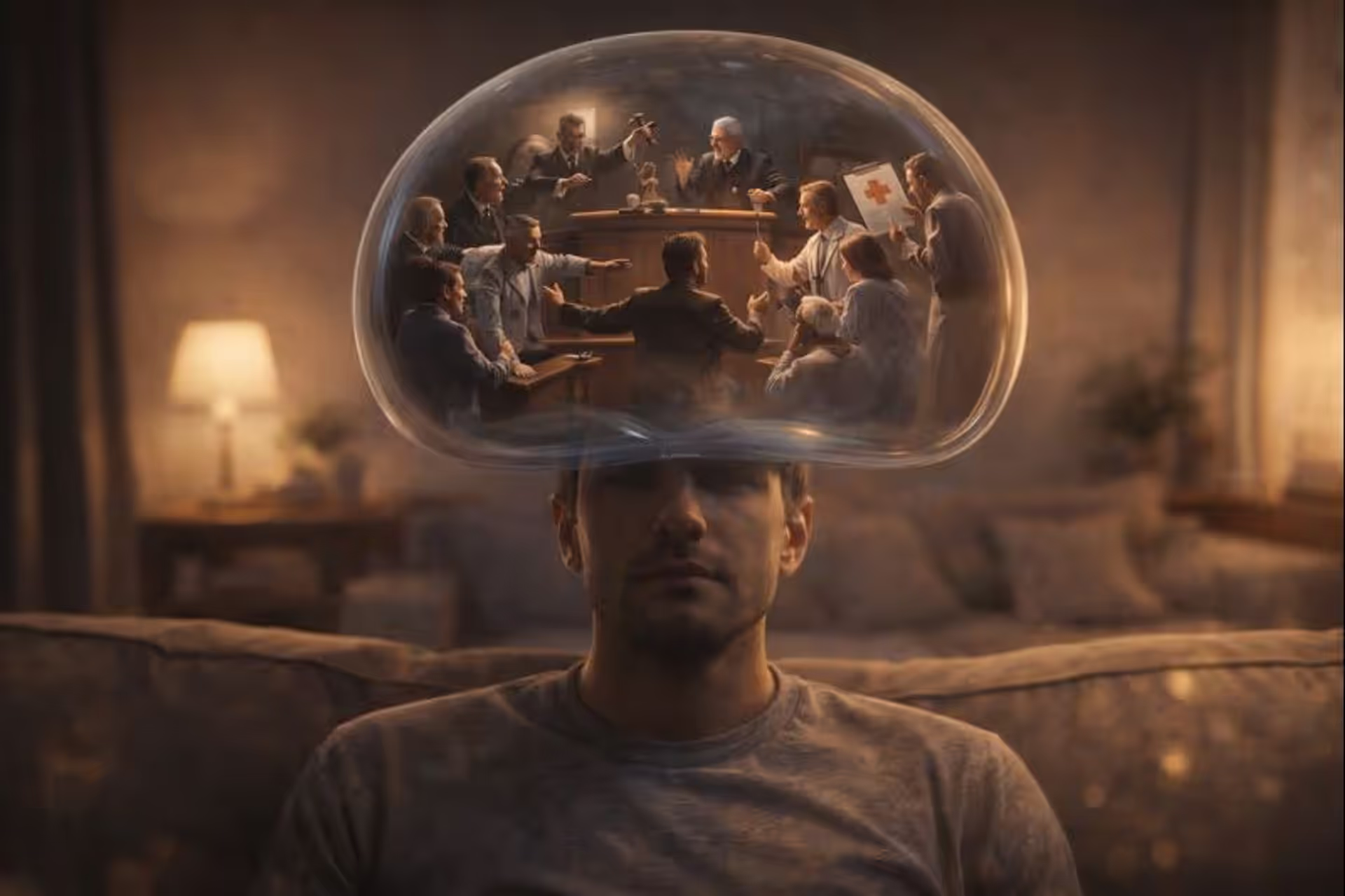
What distinguishes this after-hours distress from daytime concerns? Throughout your active hours, you stay occupied. Your focus splits between professional responsibilities, interpersonal exchanges, obligations, and diversions. Once darkness falls and external engagement evaporates, your brain suddenly gains space to digest everything it shelved earlier. Those partially formed concerns that hovered at the edges of awareness surge forward demanding recognition.
For certain individuals, this manifests as trouble initiating slumber because mental activity refuses to decelerate. For others, it translates to suddenly becoming alert at 3 AM with a racing pulse and thoughts consumed by catastrophic possibilities. Still others undergo sudden nocturnal terror episodes — abrupt, powerful surges of fright that shock them awake.
Regardless of its presentation, this pattern generates an exasperating contradiction: the stronger your desire for rest, the more worked up you become about its absence, rendering peaceful slumber increasingly unattainable. This self-reinforcing loop can seem utterly unbreakable.
What Makes Worry Escalate After Dark?
Should you have ever questioned why your brain appears intent on tormenting you precisely when you're trying to rest, multiple explanations actually exist — and comprehending them helps diminish the sense that you're powerless against your evening thoughts.
When Stillness Becomes the Enemy

Author: Benjamin Carter;
Source: ameliaearhartbook.net
Throughout daylight hours, your brain stays engaged with responsibilities, dialogues, and continuous sensory information. The moment you recline for rest, that entire stream of input evaporates. Abruptly, your mind lacks anything to concentrate on — apart from its own contents.
This marks the moment when every concern you managed to sidestep earlier returns with force. The message you neglected to send. The money matter you've been dodging. The interpersonal friction you haven't resolved. Absent diversions, these preoccupations insist on acknowledgment, frequently seeming more pressing and crushing than they would under sunlight.
Mental health experts characterize this as the "simmering pot" phenomenon. During hectic periods, concerns bubble gently beneath the surface. After dark, they overflow because sufficient mental space finally exists for them to demand notice.
How Stress Affects Your Ability to Sleep

Author: Benjamin Carter;
Source: ameliaearhartbook.net
Your body's alarm system doesn't have an off switch that activates at bedtime. If you've been under constant pressure throughout the day, your nervous system often remains in a heightened state even when you're attempting to unwind.
Hormones such as cortisol and adrenaline gear your body up for dealing with perceived dangers. When these chemicals remain elevated, they accelerate your pulse, sharpen your awareness, and keep you in a prepared stance — precisely the opposite condition required for restful sleep. A body that operated in this charged mode all day long won't instinctively shift into relaxation mode simply because you've climbed under the covers.
The Vicious Circle of Worry and Sleeplessness
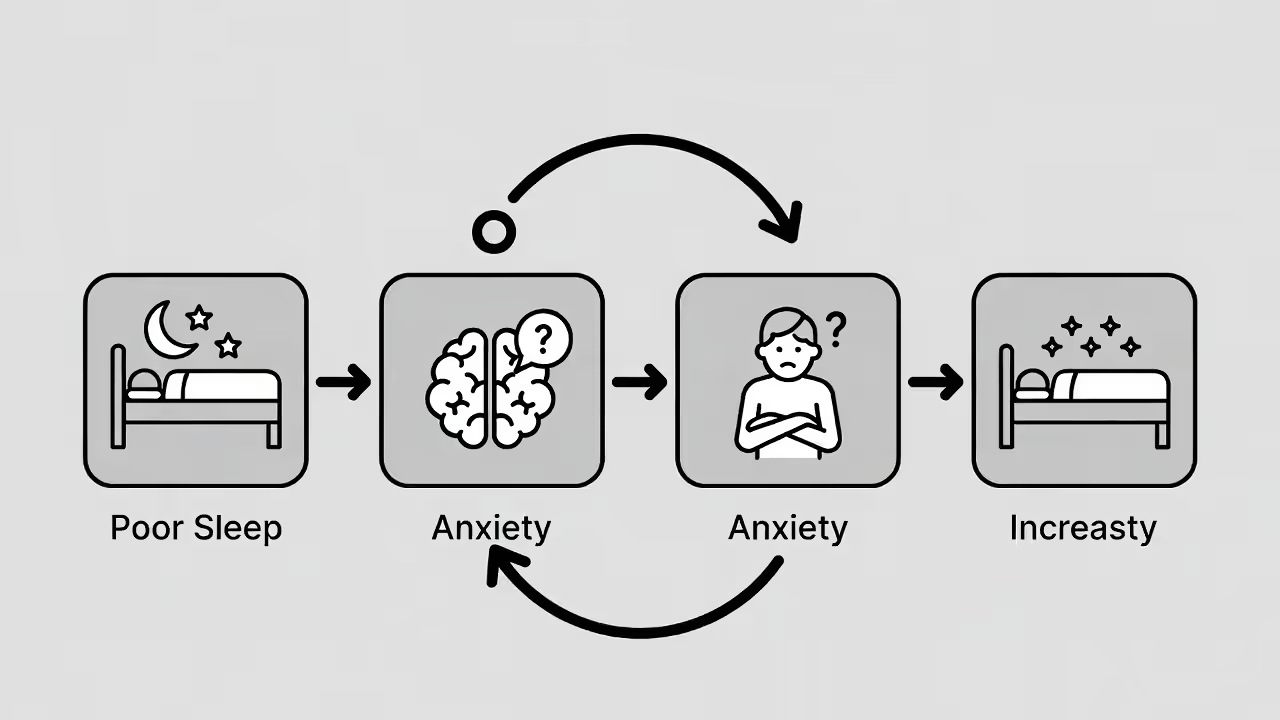
What makes nighttime anxiety especially maddening is its tendency to feed itself. Insufficient rest amplifies anxious feelings. Heightened worry interferes with slumber. The pattern repeats endlessly.
Scientific studies validate this two-way connection. Going without adequate sleep causes the emotional processing areas of your brain to become hyperactive while simultaneously dampening the regions that handle logical thinking and mood management. Put simply, following a rough night, your brain chemistry sets you up for increased nervousness the subsequent day — which in turn sabotages your ability to rest that evening.
Author: Benjamin Carter;
Source: ameliaearhartbook.net
Habits That Make Things Worse
Everyday behaviors can unknowingly worsen nighttime nervousness. Drinking coffee or other caffeinated beverages late in the afternoon maintains your nervous system in an aroused state. While alcohol may initially make drowsiness come faster, it compromises sleep quality and frequently triggers awakenings during the early morning hours. Consuming substantial meals near bedtime produces bodily unease that your mind might misread as anxiety symptoms. Meanwhile, browsing your smartphone before turning in bombards you with engaging material and simultaneously blocks melatonin release.

Author: Benjamin Carter;
Source: ameliaearhartbook.net
Recognizing the Signs of Nighttime Anxiety
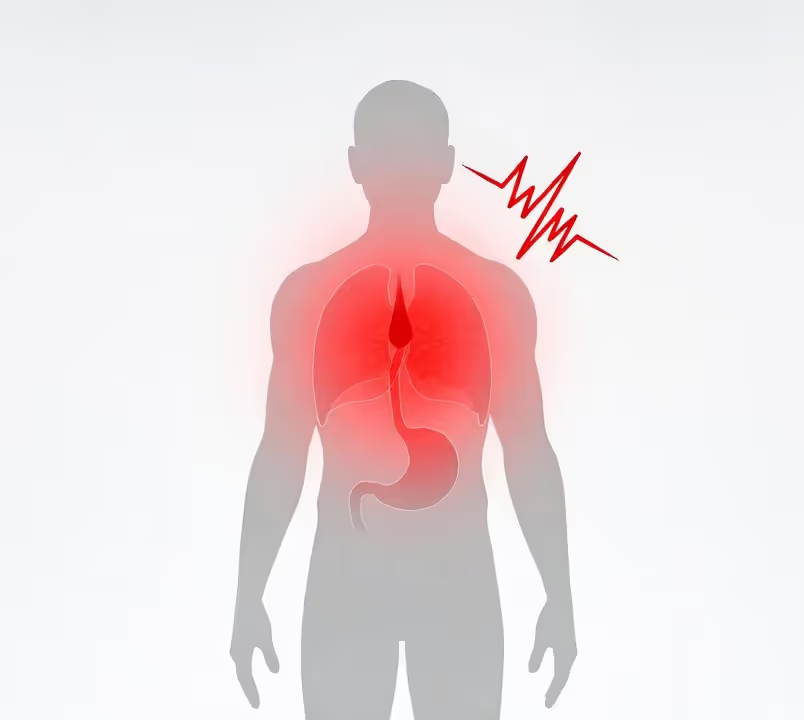
Anxiety after dark shows up through a combination of psychological and bodily indicators. Learning to spot these patterns helps you understand your experience and take suitable action.
Author: Benjamin Carter;
Source: ameliaearhartbook.net
Mental and Emotional Indicators
- Thoughts that refuse to settle, leaping continuously between concerns
- An ongoing sensation of foreboding or expectation that disaster looms
- Compulsive mental reviewing of past situations or planning for hypothetical futures
- Specific apprehension centered on the inability to fall asleep
- Feeling swamped by duties that seemed perfectly handleable during daylight hours
- Agitation or fidgetiness when attempting to decompress
- Worst-case-scenario thinking — mentally jumping to dire conclusions
Bodily Indicators
- Accelerated pulse or awareness of your heart pounding
- Pressure or tightness across the chest area
- Perspiration despite comfortable room temperature
- Tense muscles, particularly around the shoulders, neck, and jaw area
- Labored breathing or sensation of insufficient oxygen
- Stomach disturbances — queasiness, churning sensations, or gastrointestinal discomfort
- Shaking or a wired, jittery sensation
- Leg restlessness or persistent inability to find a comfortable position
Panic Episodes During Sleep
Certain individuals encounter panic attacks exclusively during nighttime hours. In contrast to anxiety that accumulates progressively, these nocturnal episodes arrive abruptly, frequently rousing you from slumber with overwhelming terror, a pounding pulse, breathing difficulties, and occasionally the conviction that you're dying or completely losing your grip on reality.
Though extremely frightening, these nighttime panic episodes pose no actual physical danger. They generally reach maximum intensity within several minutes before naturally diminishing. Nevertheless, dreading a repeat occurrence can generate anticipatory worry that compounds the difficulty of achieving sleep.
How to Calm Anxiety at Night
The strategies below combine immediate relief techniques with longer-term approaches. Some will work better for you than others — the key is experimenting to find your personal toolkit.

Author: Benjamin Carter;
Source: ameliaearhartbook.net
Calming Methods That Promote Rest
These research-supported approaches function by engaging your parasympathetic nervous system — the "restore and recover" setting that counterbalances your body's alarm response.
- Controlled Breathing Practice. Experiment with the 4-7-8 method: Draw air gently through your nostrils for 4 counts. Suspend your breath for 7 counts. Release fully through your mouth for 8 counts. The prolonged outbreath triggers your system's calming mechanisms. Complete 3-4 rounds.
- Sequential Muscle Release. Beginning at your feet, intentionally contract each muscle region for 5 seconds, then let go entirely. Progress upward through your lower legs, upper legs, midsection, torso, arms, and facial muscles. This approach dissolves bodily tightness you might not even recognize you're carrying.
- The 5-4-3-2-1 Sensory Anchoring Exercise. When worried thoughts begin spiraling, root yourself in the immediate moment: Identify 5 objects within view, 4 textures you can physically sense, 3 sounds reaching your ears, 2 scents you detect, and 1 flavor you notice. This disrupts overthinking by activating your sensory awareness.
- Mental Imagery Practice. Shut your eyes and picture a serene location with rich specificity — perhaps a shoreline, woodland, or comfortable sanctuary. Involve every sense: What appears before you? What sounds emerge? What sensations arise? What aromas drift by? This provides your mind with something soothing to dwell upon rather than concerns.
- Systematic Body Awareness. Remain motionless and direct your focus to each body region in sequence, observing sensations without criticism. This mindful exercise quiets internal mental noise while encouraging physical ease.
Strategies for When Rest Won't Come
Occasionally, regardless of your efforts, slumber remains elusive. Here's what proves useful:
- Leave your bed following 15-20 minutes of wakefulness. Remaining there in a worried state conditions your mind to link your sleeping space with unease. Relocate to a different area and engage in something peaceful until drowsiness arrives.
- Select minimally stimulating activities. Browse a printed book (avoid screens), play gentle melodies, or use a calming application. Steer clear of anything demanding mental focus or emitting blue-spectrum light.
- Transfer thoughts to paper. Station a notebook near your pillow. When concerns keep cycling endlessly, document them. This "cognitive offloading" communicates to your brain that these matters are recorded and needn't be mentally rehearsed.
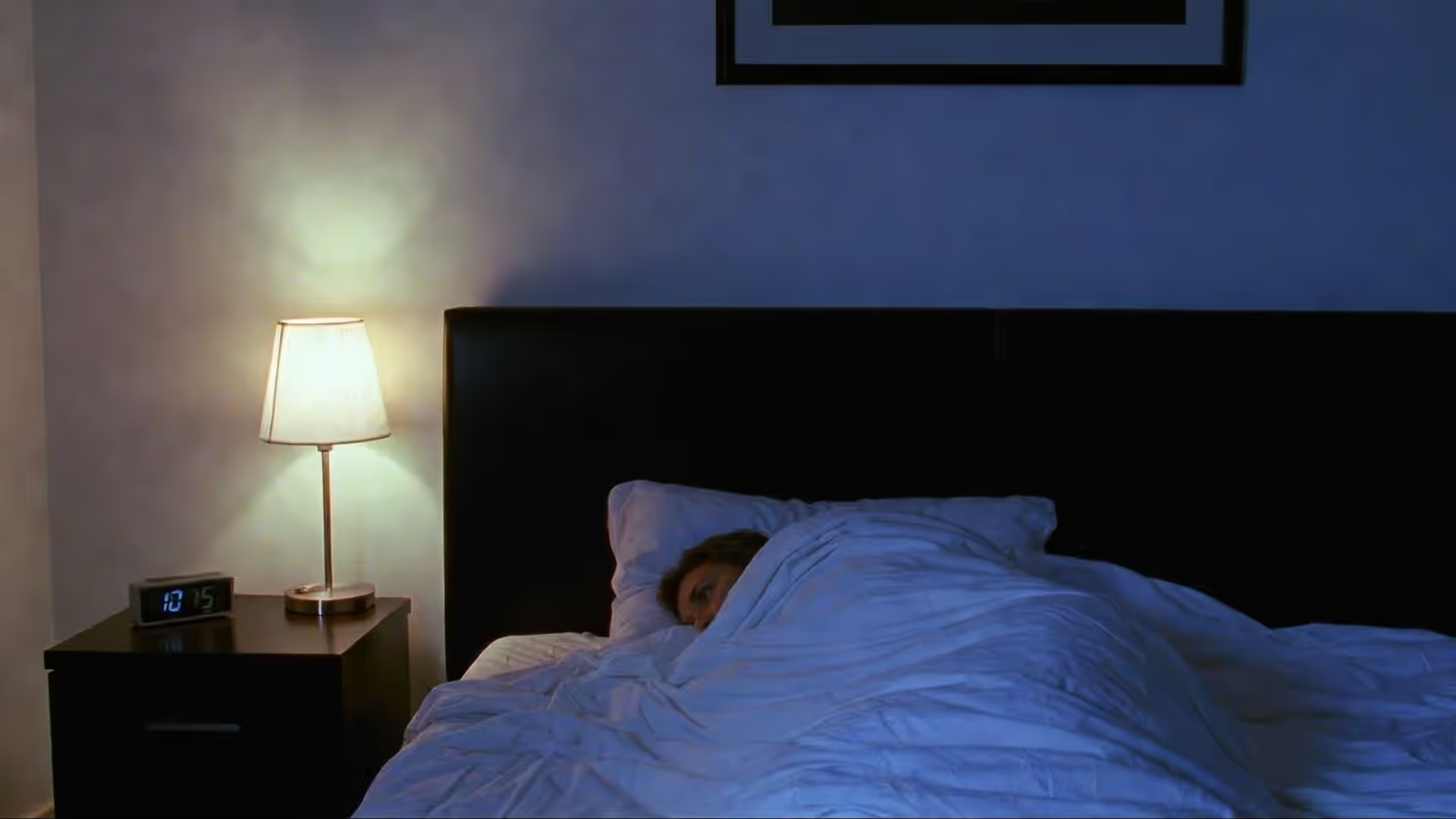
- Resist monitoring the time. Computing remaining rest hours only amplifies tension. Position your clock facing away or relocate it entirely.
- Return to bed exclusively when authentic drowsiness hits — not merely fatigued, but genuinely experiencing that magnetic pull toward slumber.
Regaining Composure During an Evening Panic Episode
Should you find yourself amid a panic episode or severe distress after dark, these approaches can help restore equilibrium:
- Acknowledge what's occurring. Remind yourself: "This is my body's alarm response. It feels awful, but poses no actual threat. It will subside." Labeling the experience diminishes its grip.
- Direct complete attention to your breath. Deliberate, measured inhalations disrupt the escalation pattern. Breathe in for 4 counts, release for 6. Extended outbreaths prove essential.
- Apply cold temperature. Splash chilled water across your face or press a cold compress to your inner wrists. This engages the mammalian dive response, which instinctively decelerates your heartbeat.
- Anchor yourself through physical contact. Plant your feet solidly against the ground. Grip a cushion firmly. Run your fingers across nearby surfaces. Tactile input tethers you to present reality.
- Resist fleeing the sensation. Remaining with the experience (instead of battling against it) teaches your brain that these episodes resolve naturally. Rising to pace may actually extend the duration.
Daily Adjustments That Ease Evening Worry
Quick-fix methods offer immediate comfort, but genuine transformation requires tackling the root behaviors that feed restless nights.
Crafting a Peaceful Pre-Sleep Ritual
Your mind requires a transitional period between daytime busyness and nocturnal stillness. Establish a decompression window — a minimum of 30-60 minutes — during which you deliberately downshift your pace.
- Lower the lighting throughout your living space as bedtime draws near, signaling your system that darkness approaches
- Enjoy a warm soak or shower — the resulting decline in body temperature encourages drowsiness
- Engage in light stretching or gentle restorative yoga movements
- Peruse calming reading material (steer clear of headlines, suspenseful fiction, or professional documents)
- Put on soothing melodies, nature recordings, or guided relaxation narratives
- Steer away from tense conversations or major decision-making during the final hour before retiring
Foundational Rest Practices
- Stick to uniform wake and sleep times, including weekends — your internal clock flourishes with predictability
- Ensure your sleeping space stays cool (65-68°F suits most individuals), shadowy, and hushed
- Designate your mattress exclusively for rest and intimacy — never for professional tasks, device browsing, or television viewing
- Cut off caffeine consumption by midday and alcoholic drinks at least 3-4 hours prior to turning in
- Skip substantial meals during late evening hours
- Maintain regular physical activity, though conclude intense exercise sessions no closer than 3-4 hours before bed
Waking-Hour Practices That Make a Difference
How you spend your active hours profoundly influences your nightly rest. Handling tension during daylight prevents it from building up and erupting once you lie down.
- Incorporate daily movement — even a brief 20-minute stroll diminishes nervousness and enhances rest quality
- Weave short mindfulness moments throughout your day, rather than reserving them solely for bedtime
- Curtail exposure to news feeds and social platforms, particularly during evening hours
- Designate "productive worry sessions" earlier in the day — allocate 15 minutes to process concerns, then deliberately release them
- Tackle issues proactively whenever feasible instead of allowing them to simmer into after-dark mental spirals
Herbal Solutions and Nutritional Support
Certain individuals discover comfort through plant-based and supplemental approaches. Though these shouldn't replace efforts to address underlying causes, they serve as valuable complements to your overall strategy.
- Chamomile infusion — research confirms its gentle soothing properties
- Magnesium supplements — potentially beneficial for rest quality and muscular ease
- Lavender essential oil therapy — this fragrance exhibits documented tension-reducing characteristics
- Valerian root extract — a traditional remedy for promoting rest, backed by some scientific evidence
- Tart cherry concentrate — contains naturally occurring melatonin
- L-theanine — an amino acid present in tea leaves that encourages calm without causing grogginess
Essential note: Always discuss supplement use with your medical provider beforehand, particularly if you're taking prescription medications or managing existing health issues.
When Evening Distress Points to a Larger Issue
While sporadic rest-disrupting worry falls within normal experience, ongoing patterns might signal an underlying condition warranting professional attention.
- Generalized Anxiety Disorder (GAD) — persistent, disproportionate concern spanning multiple life domains, occurring more often than not across at least half a year
- Panic Disorder — repeated terror episodes, including those occurring during sleep, accompanied by dread of subsequent occurrences
- Post-Traumatic Stress Disorder (PTSD) — heightened distress, disturbing dreams, and disrupted rest following traumatic experiences
- Depression — frequently coexists with nervous conditions and can compound sleep difficulties
- Chronic insomnia — persistent trouble achieving rest on three or more evenings weekly, extending beyond three months
Reaching out to a specialist makes sense when:
- Evening distress continues beyond a two-week span
- Rest difficulties meaningfully interfere with professional performance, personal connections, or routine activities
- Terror episodes occur with regularity
- Personal coping methods repeatedly prove ineffective
- Thoughts of harming yourself emerge, or hopelessness takes hold
Therapeutic options encompass cognitive behavioral therapy (CBT), demonstrating remarkable effectiveness for both worry-related conditions and sleeplessness, alongside pharmaceutical intervention where suitable. A qualified mental wellness practitioner can collaborate with you to identify the most fitting path forward.
Expert Insights
Mental health professionals offer valuable perspective on why nighttime anxiety happens and how to address it.
All the things that have been put on the back burner come to the forefront of your head. Without competing demands for your attention, these worries often get louder and more pronounced. Chronic daytime stress puts your body into overdrive and taxes your hormones and adrenal system, which are directly linked to sleep.
— Susan Albers, PsyD, Psychologist, Cleveland Clinic
Activities that switch on the body's natural relaxation response feel great. And they have been proven by research to improve sleep. They help by reducing the release of the stress hormones cortisol and adrenaline and by slowing your heart rate and breathing. Your body and mind calm down.
— Luis F. Buenaver, PhD, CBSM, Johns Hopkins Center for Sleep
Frequently Asked Questions
Closing Thoughts: Peaceful Evenings Are Within Reach
If worry after dark has established itself as a recurring uninvited presence, here's something essential to understand: this need not define your nights forever. Evening distress affects countless people, and despite feeling insurmountable, it yields to proper care and personal effort.
The approaches outlined throughout this resource — spanning breathing methods, rest optimization practices, daily habit modifications, and guidance on pursuing professional support — present numerous routes toward more tranquil evenings. A single miraculous fix probably won't materialize. Rather, improvement typically emerges from blending multiple strategies: handling daytime tension, establishing a soothing pre-sleep ritual, employing calming exercises, and confronting any deeper patterns of unease.
Transformation requires patience. Challenging nights will still occur occasionally. Yet through steady dedication, you can progressively rewire your mind to connect evening hours with restoration instead of rumination. Every restful night reinforces the previous one, incrementally replacing the worry-sleeplessness pattern with healthier rhythms.
You merit genuine rest. You deserve the ability to shut your eyes without your thoughts immediately cueing up their familiar playlist of concerns. Armed with appropriate strategies and assistance, achieving this becomes entirely possible.
This evening, begin modestly. Experiment with a single approach. Observe what provides comfort. And extend yourself grace throughout the journey.